If, like me, you sometimes need a gentle push to get back into your art practice at the start of a new year, then you might find yourself turning to an ‘art challenge’. I see nothing wrong with taking a little nudge to get the creative engine running again – they are actually a simple way to get making again, without decision fatigue.
Having done the 100 day project 3 times, I have some experience in art challenges, but this year I decided to try something a little different – the Printer Solstice challenge. It’s a slower, more reflective Instagram challenge, with one prompt a week from the Winter Solstice through to the Spring Equinox, all centred around printmaking.
And it turned out to be exactly what I needed.
Firstly weekly prompts work for me – I tended to do the 100 day project in weekly spurts anyway. Secondly, although it’s about the same period of time, it seems less, as it’s only a prompt a week (less slogging though that last quarter!). And, of course, it’s my thing- printmaking, so the work produced by the other participants resonated a little more for me.
So most challenges are essentially prompts that people interpret in their own way. Printer Solstice publish their prompts fairly early on and this year they were all maths base (Addition, Even, One, Subtraction, Odd, Expression, Division, Two, Volume, Fraction, Angle, Multiplication) but ripe for all sorts of interpretations.
It seems crazy that something as simple as a prompt would help- but it does. It adds a constraint and therefore decreases decision making. When you could do literally anything, it helps to know you only have to do one thing.
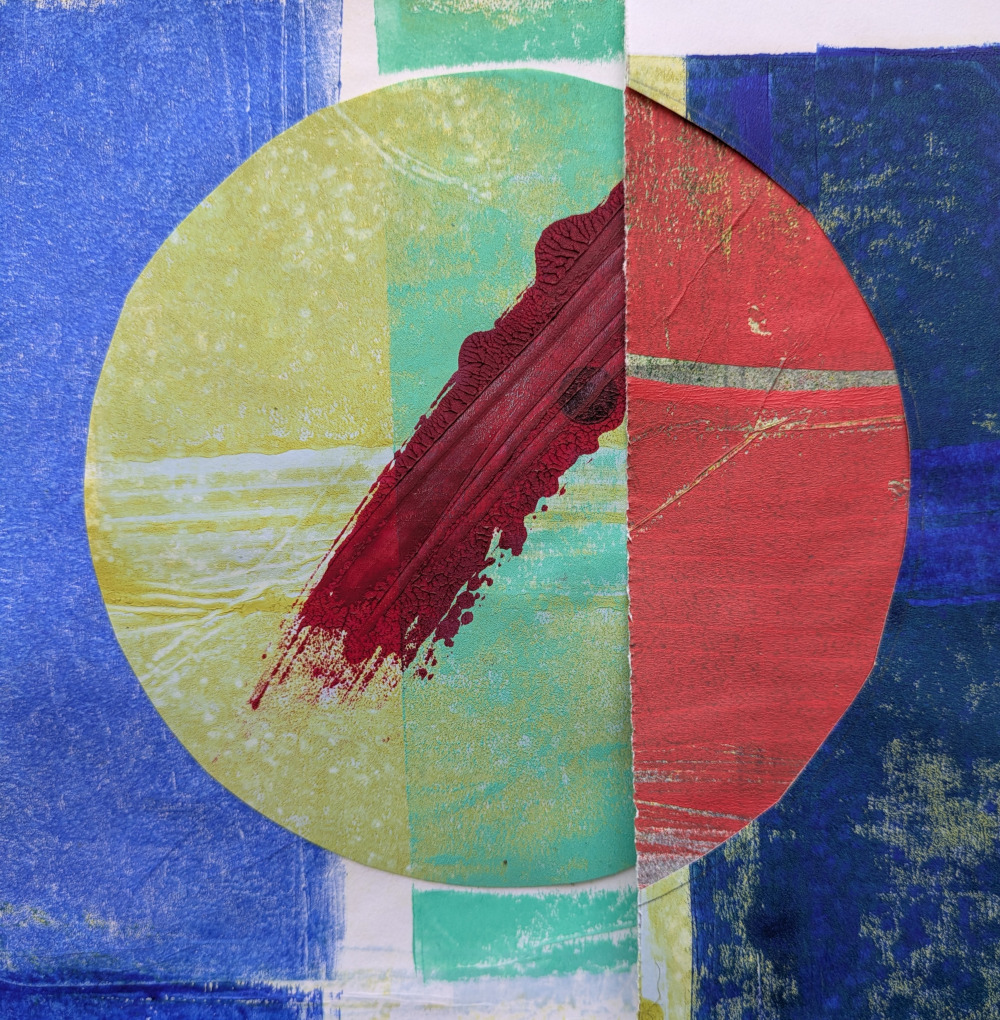
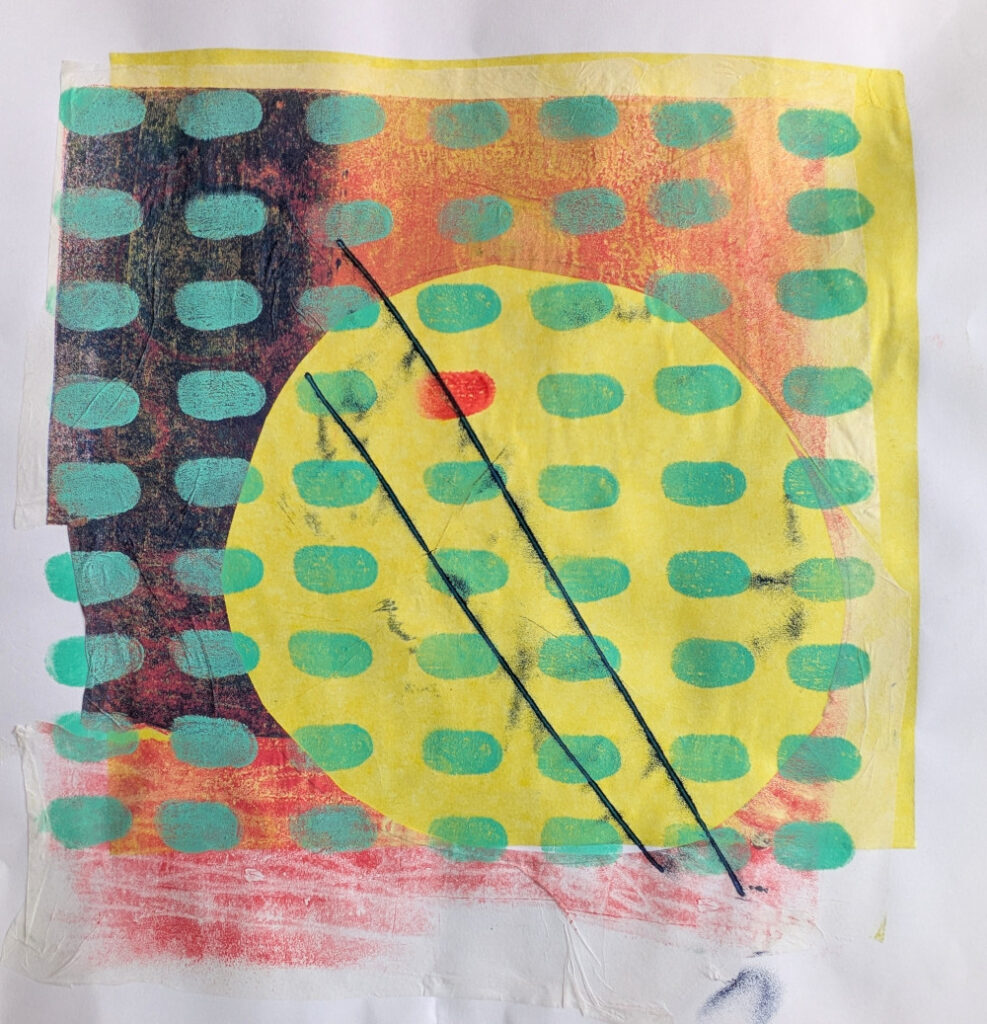
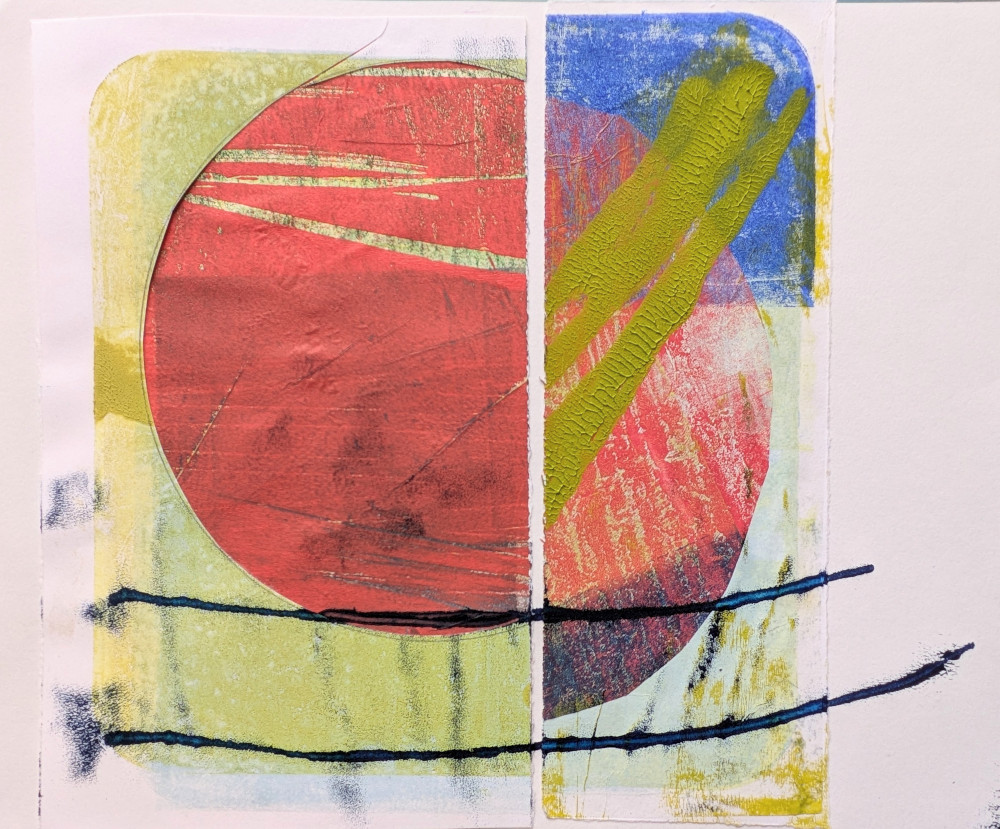
And that’s the joy of art challenges – something as simple as a prompt can get the mind whirring. A weekly habit that steadies the ship and takes heavy creative decision making out of the equation, which is exactly what I need sometimes.
From earlier experience I know I also find it easier to have some idea of what I’m going to do – this makes the part where you sit at your workspace staring at the paper, just that little bit easier.
So I made a (very) rough plan, when feeling creatively energetic one evening. I wrote out ideas of visual things that came to me when reading the prompts – this really helped, it got me excited about making art again.
I kept it abstract – I discovered how much easier it is to stay abstract each time I did the 100 day project. So much more forgiving, not aiming towards a completed outcome but merely adding something that makes each image a bit better.
I’ve also learnt that ‘the simpler the better’. Like, really simple. Otherwise, I will find excuses not to do it.
So my plan was to add a layer each week rather than create a completed new work. A reduction print in reverse, if you will.
Some might say that’s cheating, but just the action of creating an image was very helpful for me (another thing I’ve learnt from the 100 day project, that, particularly in social media and online challenges, the image is the thing, not the actual object – so I could lay prints next to each other, on top of each other, crop with a photo app, fold paper, layer things up – it all counts). It also made me see the good stuff in the very simple first layers that I made.
I also leaned into collage as well, cutting and mixing up prints that I’d made and then printing over them again. In actual fact I ended up starting only 2 ‘series’ of prints, bringing one set to a kind of completion and then starting another set with 4 prompts to go.
This challenge also allowed me to lean into my propensity for making series rather than editions or one ‘masterwork’ – I prefer this, and it’s much more forgiving.
I didn’t produce 1 definitive print, but rather a series of offerings for that week. I find this means I don’t have to make hard and fast commitments, but it does spur me into small actions, like making a mark on one print, cutting one up for collage etc.
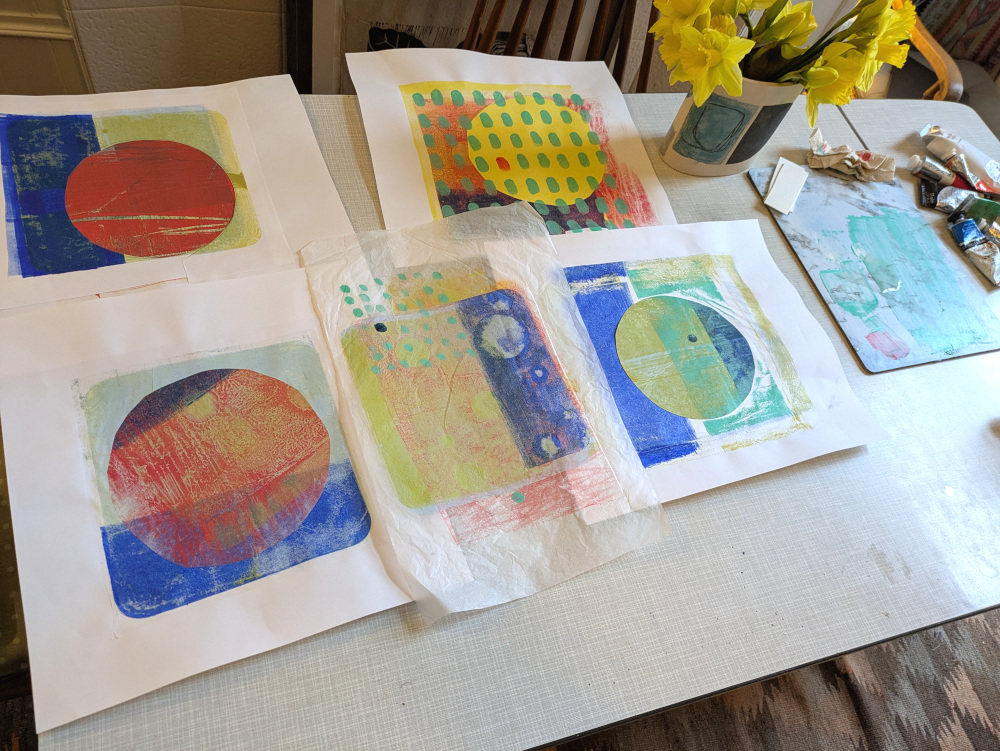
Because I’m a hand printer, all of this was done either at the dining room table or in my home shed studio, so no big set up.
Having such a long time between layers, also allowed me to really look at what I had in front of me and what I wanted to add. Slow attention and quick, simple action.
So am I a fan of art challenges? Yes, but pick the right one for you, and don’t chide yourself if you miss a prompt, be forgiving. Allow it to tell you things about how you work, and maybe show you a possible new direction. Keep it simple, and don’t try to do too many new things at the same time. Then enjoy!